


Oaxaca, a cultural and culinary gem in southern Mexico, is celebrated for its rich indigenous heritage, colorful festivals, and artisanal crafts. For those pondering things to do in Oaxaca, wandering through the vibrant markets of Benito Juárez and 20 de Noviembre, where the scents of mole and freshly baked tlayudas fill the air, and exploring the historic Oaxaca Cathedral and Santo Domingo Temple, both architectural marvels, are top activities.
The city’s Monte Albán, a UNESCO World Heritage site, offers a glimpse into the ancient Zapotec civilization with its impressive ruins and panoramic views. Nearby, the Hierve el Agua, a set of natural rock formations resembling cascades of water, provides a unique and picturesque landscape.
Beyond its urban and historical attractions, Oaxaca is renowned for its traditional celebrations like the Day of the Dead and Guelaguetza festival. Oaxaca’s blend of indigenous traditions, colonial architecture, and natural wonders makes it a captivating destination for those seeking the best places to visit in Mexico.
Attractions & Things to Do in Oaxaca, Mexico
1. Monte Albán
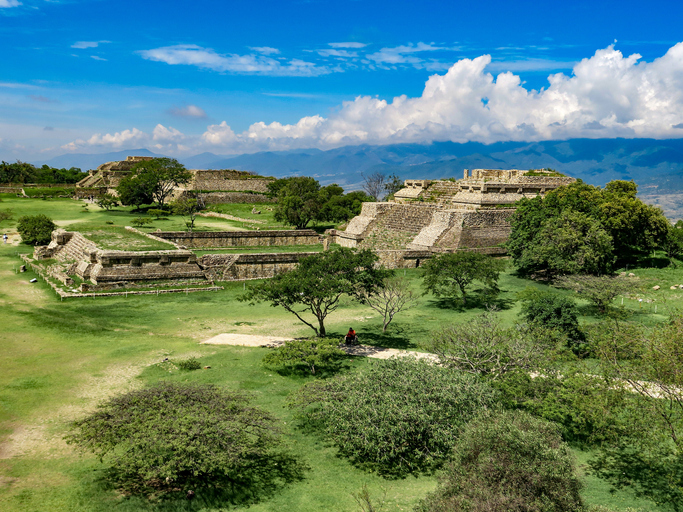
Once the ancient capital of the Zapotec civilization, Monte Albán is an archeological site that overlooks the Oaxaca Valley. The ruins, including temples, tombs, and plazas, showcase this Mesoamerican culture’s rich history and architecture. It’s a window into the past, where one can immerse themselves in the region’s evolution over centuries.
Location: Located 10 km west of Oaxaca City. Accessible by car, taxi, or guided tour.
Scenic Spot: Stunning panoramic views of the Oaxaca Valley from the ancient Zapotec ruins.
Best Time to Visit: Morning to avoid the midday heat and crowds.
Suitable for All Ages: Suitable for all, though uneven terrain may be difficult for elderly visitors and young children.
Price: Approximately $4–$5 for entrance.
Travel Tip: Wear comfortable shoes and bring a hat or umbrella for shade, as there’s a lot of walking in the open sun.
2. Oaxaca’s Zócalo (Main Square)

At the heart of Oaxaca City lies the Zócalo, a bustling square surrounded by restaurants, cafes, and shops. Here, locals and tourists gather to enjoy live music, savor Oaxacan cuisine, or watch the world go by under the shade of laurel trees.
Location: In the heart of Oaxaca City, easily accessible on foot or by taxi.
Scenic Spot: Surrounded by historic buildings, vibrant markets, and lively street performances.
Best Time to Visit: Early evening when the square comes alive with music and dancing.
Suitable for All Ages: Ideal for all age groups, offering a relaxed atmosphere for families, couples, and solo travelers.
Price: Free to visit.
Travel Tip: Visit in the early evening when the square comes alive with music and dancing. It’s a perfect spot to enjoy a local mezcal or hot chocolate.
3. Hierve el Agua

Translating to “The Water Boils,” Hierve el Agua is a set of natural rock formations that resemble cascading waterfalls. These “petrified” falls sit atop cliffs, offering breathtaking panoramic views of the mountains and valleys. The mineral-rich springs here are also believed to have therapeutic properties.
Location: 70 km east of Oaxaca City, accessible by car, colectivo, or guided tour.
Scenic Spot: Natural “petrified waterfalls” with mineral-rich pools and breathtaking mountain views.
Best Time to Visit: Early morning or late afternoon for cooler weather and fewer crowds.
Suitable for All Ages: Suitable for all, though some steep and uneven paths may be challenging for the elderly and very young children.
Price: Approximately $3 for entrance; additional fees for transportation.
Travel Tip: Don’t forget your swimsuit. There are natural pools at the top where you can dip and enjoy the vista.
4. Santo Domingo Temple

This colonial-era temple is one of Oaxaca’s most iconic landmarks. Featuring stunning baroque architecture, the church, and adjoining ex-convent house, the Oaxaca Cultural Center, which includes the Museum of Oaxacan Cultures – a treasure trove of regional artifacts and history.
Location: Oaxaca City center, easily walkable from most areas.
Scenic Spot: Stunning baroque architecture with intricate carvings and golden interiors.
Best Time to Visit: Morning or late afternoon to appreciate the lighting and avoid crowds.
Suitable for All Ages: Suitable for all, though young children may not find it engaging.
Price: Free to enter, museum access costs approximately $3–$5.
Travel Tip: Allocate at least two hours for a visit, especially if you plan to explore the museum. Photography inside the church might be restricted, so always check beforehand.
5. Benito Juárez Market
Named after one of Mexico’s beloved presidents, Benito Juárez Market is a maze of stalls selling everything from fresh produce to handcrafted textiles. Dive into the vibrant atmosphere, and you’ll find a sensory overload of colors, scents, and flavors unique to Oaxaca.
Location: Central Oaxaca City, within walking distance from the Zócalo.
Scenic Spot: A lively marketplace filled with vibrant colors, local produce, and handmade crafts.
Best Time to Visit: Mid-morning for fresh produce and fewer crowds.
Suitable for All Ages: Suitable for all, but can be crowded and overwhelming for young children.
Price: Free to enter; prices vary for purchases.
Travel Tip: This is a great place to buy souvenirs, especially locally-made chocolates and mole pastes. Remember to haggle politely for a better deal.
6. Ethnobotanical Garden

Situated beside the Santo Domingo Temple, the Ethnobotanical Garden showcases the diverse plant life of Oaxaca. Guided tours offer insights into how indigenous communities have used these plants over the centuries, from medicinal applications to building materials.
Location: Adjacent to Santo Domingo Temple in Oaxaca City.
Scenic Spot: Showcases Oaxaca’s diverse plant life, including cacti and medicinal plants.
Best Time to Visit: Morning when guided tours are available.
Suitable for All Ages: Best for adults and older children interested in nature and history.
Price: Guided tours cost approximately $4–$5 per person.
Travel Tip: Tours are often the only way to access the garden, so check the schedule beforehand. And don’t forget to wear a hat or sunscreen as some parts of the garden can be pretty sunny.
7. Tule Tree (El Árbol del Tule)

Located in the town of Santa María del Tule, the Tule Tree is one of the most giant trees in the world by trunk girth. This Montezuma cypress is over 2,000 years old and holds a special place in local folklore and history. Its sheer size and unique shape, with many protruding limbs, make it a natural wonder.
Location: In the town of Santa María del Tule, 10 km east of Oaxaca City. Accessible by bus or taxi.
Scenic Spot: One of the largest and oldest trees in the world, with a massive trunk.
Best Time to Visit: Morning to enjoy the peaceful surroundings and take great photos.
Suitable for All Ages: Suitable for all, including children and elderly visitors.
Price: Free to visit, with optional small donations for maintenance.
Travel Tip: The town is charming, so plan to explore the local eateries and craft shops after visiting the tree.
8. Oaxacan Textile Museum (Museo Textil de Oaxaca)
Dedicated to the diverse and intricate textiles of the region, this museum offers a deep dive into the art of weaving. With displays ranging from contemporary designs to centuries-old pieces, visitors gain an appreciation for the skill and tradition of Oaxacan weavers.
Location: Oaxaca City center, a short walk from the Zócalo.
Scenic Spot: Displays of intricate, handwoven textiles from indigenous communities.
Best Time to Visit: Midday for a quiet and immersive experience.
Suitable for All Ages: Suitable for all, but young children may not find it very engaging.
Price: Free entrance, though donations are encouraged.
Travel Tip: The museum regularly hosts workshops and demonstrations. If you’re interested, inquire ahead of time to participate and learn the basics of weaving.
9. Jardín Etnobotánico de Oaxaca
A verdant oasis in the city’s heart, the Jardín Etnobotánico is an ethnobotanical garden showcasing the vast array of plants native to Oaxaca and their importance in local culture and history. The garden offers a serene space to learn and relax, from medicinal plants to traditional dyes.
Location: Located next to Santo Domingo Temple in Oaxaca City.
Scenic Spot: A lush, curated collection of Oaxacan flora with stunning cactus displays.
Best Time to Visit: Morning guided tours provide the best experience.
Suitable for All Ages: Best for adults and older children; younger children may find it less engaging.
Price: Guided tour costs approximately $4–$5 per person.
Travel Tip: Attend one of the guided tours in English; it will provide a deeper understanding of the region’s plant life and significance.
10. Oaxacan Nightlife at Callejón del Diamante
A narrow alleyway lined with bars, mezcalerías, and live music venues, Callejón del Diamante, is the heartbeat of Oaxaca’s nightlife. From traditional mariachi bands to contemporary tunes, there’s something for everyone.
Location: A vibrant alleyway in the historic center of Oaxaca City.
Scenic Spot: Lively streets filled with mezcalerías, bars, and live music venues.
Best Time to Visit: After 8 PM, when the nightlife starts to pick up.
Suitable for All Ages: Best for adults; not suitable for children.
Price: Free to explore; drink prices vary.
Travel Tip: While Oaxaca is known for its mezcal, always drink responsibly and ensure you can safely return to your accommodation.
11. Museum of Contemporary Art (MACO)
Situated in a beautiful colonial mansion, the Museum of Contemporary Art (MACO) offers a diverse collection of modern and contemporary works from Mexican and international artists. The rotating exhibitions ensure there’s always something new and intriguing to explore.
Location: Housed in a colonial mansion in downtown Oaxaca.
Scenic Spot: Exhibits modern and contemporary art from Mexican and international artists.
Best Time to Visit: Early afternoon for a quiet visit.
Suitable for All Ages: Suitable for art lovers of all ages.
Price: Entrance fee is approximately $2–$4 per person.
Travel Tip: After visiting the museum, stroll in the surrounding historic district to appreciate Oaxaca’s blend of old and new.
12. San Bartolo Coyotepec

Famous for its unique black pottery known as “barro negro,” San Bartolo Coyotepec is a small town just south of Oaxaca City. Here, you can witness artisans crafting intricate designs using age-old techniques passed down through generations.
Location: 15 km south of Oaxaca City, accessible by taxi or tour.
Scenic Spot: A town famous for its unique black pottery workshops.
Best Time to Visit: Mid-morning to see artisans at work.
Suitable for All Ages: Suitable for all, with interactive pottery-making opportunities.
Price: Free to visit; pottery prices vary.
Travel Tip: Many workshops allow visitors to try their hand at pottery-making. It’s a unique opportunity to create a personal keepsake from your trip.
13. Mitla

Second only to Monte Albán in terms of archaeological significance in Oaxaca, Mitla is renowned for its intricate geometric mosaics. These ruins were a religious center for the Zapotecs and later the Mixtecs, with temples and tombs that have stood for centuries.
Location: 40 km southeast of Oaxaca City, accessible by car or guided tour.
Scenic Spot: Ancient Zapotec ruins known for their intricate geometric mosaics.
Best Time to Visit: Early morning or late afternoon for better lighting and fewer crowds.
Suitable for All Ages: Suitable for all, but uneven terrain may be challenging for elderly visitors.
Price: Entrance fee is approximately $4–$5 per person.
Travel Tip: While less crowded than Monte Albán, visiting Mitla in the early morning or late afternoon will offer a more peaceful experience and better light for photography.
14. Mercado 20 de Noviembre
Another bustling market in Oaxaca, Mercado 20 de Noviembre, is particularly famous for its food stalls. Dive into a world of tantalizing aromas and flavors, from tlayudas and empanadas to sweet churros and Oaxacan chocolate.
Location: Oaxaca City center, a few blocks from the Zócalo.
Scenic Spot: A food lover’s paradise with local specialties like tlayudas and mole.
Best Time to Visit: Lunch hours for the freshest food.
Suitable for All Ages: Great for all ages, though it can get crowded.
Price: Free to enter; meal prices range from $3–$10.
Travel Tip: Venture into the “pasillo de carnes asadas,” or grilled meat corridor, where you can choose fresh meats to be grilled right before you, paired with freshly made tortillas and salsas.
15. Teotitlán del Valle
Nestled in the foothills of the Sierra Juarez mountains, Teotitlán del Valle is a traditional Zapotec weaving village. Renowned for its hand-woven rugs and textiles dyed with natural ingredients like indigo and cochineal, it offers an authentic glimpse into Oaxacan crafts.
Location: 30 km east of Oaxaca City, accessible by car or bus.
Scenic Spot: A traditional Zapotec weaving village known for handmade rugs.
Best Time to Visit: Morning when workshops are open.
Suitable for All Ages: Suitable for all, especially those interested in crafts.
Price: Free to visit; rugs and textiles range from $50–$500.
Travel Tip: If you’re purchasing textiles, ask about the dyeing process. Rugs made using natural dyes are more valuable and long-lasting than synthetic ones.
16. Mezcal Tasting Tours

Oaxaca is the birthplace of mezcal, the smoky agave-based spirit. Numerous local distilleries, or “palenques,” offer tours where you can learn about the production process and, more importantly, sample the various types of this beloved drink.
Location: Various mezcal distilleries (palenques) around Oaxaca, mainly in Santiago Matatlán.
Scenic Spot: Rolling agave fields and rustic distilleries with traditional mezcal-making processes.
Best Time to Visit: Late morning or early afternoon for a full tasting experience.
Suitable for All Ages: Best for adults; not suitable for children.
Price: Tasting tours range from $10–$50, depending on the distillery.
Travel Tip: Always pace yourself during tastings and ensure you’ve eaten beforehand. And remember, while all tequilas are mezcals, not all mezcals are tequilas. Ask your guide to explain the difference!
Plan Your Perfect Trip with Our Trusted Travel Partners
🚗 Find the Best Car Rental Deals with Rentalcars.com and GetRentacar.com
🏨 Discover the Best Accommodations with Booking.com
🌟 Discover Amazing Experiences with GetYourGuide.com and Tiqets.com
📶 Stay Connected with Airalo.com
Oaxaca, Mexico: Ratings
Kid-Friendly Activities in Oaxaca: 8/10 – Oaxaca offers numerous family-friendly attractions, such as the Oaxaca Ethnobotanical Garden, the Museo de las Culturas de Oaxaca, and the Benito Juárez Market. The city’s many parks and plazas, including the Zócalo and Parque El Llano, provide outdoor space for children to explore and play. Nearby archaeological sites like Monte Albán also offer educational opportunities.
Nightlife in Oaxaca: 7/10 – Oaxaca has a lively but more relaxed nightlife scene compared to larger cities. Areas like the Zócalo and the Centro Histórico offer a variety of bars, mezcalerías, and live music venues. The city offers everything from traditional folk music and dance to modern bars and casual lounges, catering to diverse tastes.
Sport in Oaxaca: 7/10 – Oaxaca provides various opportunities for sports enthusiasts, including hiking and exploring nearby natural attractions such as Hierve el Agua and the Sierra Norte mountains. The city has facilities for football, basketball, and other sports. Outdoor activities like cycling and bird-watching in the surrounding areas are popular.
Culture and Attractions in Oaxaca: 10/10 – Oaxaca is rich in cultural and historical attractions, including the UNESCO World Heritage site of Monte Albán, the Santo Domingo Church, and the vibrant markets like Mercado Benito Juárez and Mercado 20 de Noviembre. The city’s cultural scene includes numerous festivals, museums, and traditional arts and crafts, reflecting its rich indigenous heritage.
Gastronomy in Oaxaca: 10/10 – The culinary scene in Oaxaca is renowned for its diversity and depth, featuring traditional Oaxacan dishes such as mole, tlayudas, and chapulines (grasshoppers). The city offers a range of dining options from street food vendors to upscale restaurants, providing a rich culinary experience that highlights local ingredients and flavors.
Shopping in Oaxaca: 8/10 – Shopping in Oaxaca includes traditional markets such as Mercado Benito Juárez and Mercado 20 de Noviembre, where visitors can find local crafts, textiles, and souvenirs. The city offers a variety of products, from artisanal goods to contemporary fashion, providing a unique shopping experience that reflects its cultural heritage.
Prices in Oaxaca: 8/10 – Oaxaca is generally affordable, with reasonable prices for accommodation, dining, and shopping. The city offers good value for money, making it accessible for budget-conscious travelers.
Average price for a hotel night: $70
Cost of a lunch at a local restaurant: $6
Price of a beer: $2
Price of a coffee: $1.50
Beyond the City: Exploring Surroundings and Stays in Oaxaca, Mexico
For those looking to explore beyond the vibrant streets and markets, top day trips near Oaxaca lead to the mystical ruins of Monte Albán, the tranquil beauty of Hierve el Agua, and the artisan villages of the surrounding valleys, each journey offering a deep dive into the rich cultures and natural landscapes of Mexico.
When it comes to finding the perfect place to stay, Oaxaca accommodations offer a charming mix of options, from traditional guesthouses in the heart of the city to luxurious countryside estates, each ensuring a warm welcome and a genuine experience of Oaxacan hospitality.
FAQ About Things to Do in Oaxaca, Mexico
What is Oaxaca best known for?
Oaxaca is renowned for its rich indigenous culture, colonial architecture, vibrant arts scene, and world-famous cuisine, especially mole sauces and mezcal.
Are there any UNESCO World Heritage sites in Oaxaca?
Yes, the Historic Centre of Oaxaca and the Archaeological Site of Monte Albán are listed as UNESCO World Heritage sites. Monte Albán was once the ancient capital of the Zapotec civilization.
What local dishes should I try in Oaxaca?
Oaxaca is a gastronomic paradise. You should try dishes like “mole negro,” “tlayudas,” “chapulines” (fried grasshoppers), and “quesillo” (Oaxacan string cheese). Don’t forget to sample some local mezcal!
Are there any traditional markets to explore in Oaxaca?
Absolutely! The Mercado Benito Juárez and Mercado 20 de Noviembre are two of the most popular markets in Oaxaca City, where you can find local crafts, food, and traditional products.
Can I learn about indigenous cultures in Oaxaca?
Yes, Oaxaca is home to 16 different indigenous groups. The Museo de las Culturas de Oaxaca offers insights into the region’s diverse cultures. Additionally, visiting local villages and participating in community-based tourism can provide a deeper understanding.
Is Oaxaca a good place for handicraft shopping?
Definitely! Oaxaca is famous for its hand-woven textiles, black pottery, and intricate wood carvings known as “alebrijes.” The town of Teotitlán del Valle is mainly known for its traditional weaving.
Are there any natural attractions near Oaxaca?
Yes, the Hierve el Agua petrified waterfalls are a must-visit. These natural rock formations resemble cascading waterfalls and offer breathtaking views. The area also has natural mineral springs where you can take a dip.
Is it safe to explore Oaxaca’s nightlife?
Oaxaca has a lively nightlife with numerous bars, mezcalerías, and cultural events. While it’s generally safe, as with any destination, staying aware of your surroundings and avoiding poorly lit areas is essential.
Sources:
https://en.wikipedia.org/wiki/Oaxaca
https://www.getyourguide.com/oaxaca-l779/
This post may contain affiliate links, which means we may receive a commission if you click a link and purchase something that we have recommended, at no extra cost to you.
