


Busan, South Korea’s second-largest city, is a vibrant port city known for its stunning beaches, bustling markets, and scenic mountains. For those considering things to do in Busan, relaxing on the sandy shores of Haeundae Beach, one of the country’s most famous beaches, and exploring the Jagalchi Fish Market, the largest seafood market in Korea, are top activities.
The city’s Gamcheon Culture Village, with its brightly colored houses and artistic murals, offers a unique and photogenic experience. Nearby, the Beomeosa Temple, a historic Buddhist temple located on the slopes of Geumjeongsan Mountain, provides a peaceful retreat and insight into Korea’s religious practices.
Beyond its urban and coastal attractions, Busan also serves as a gateway to the beautiful Gyeongju region, home to ancient Silla Kingdom relics. For those seeking the best places to visit in South Korea, Busan’s blend of natural beauty, cultural richness, and urban energy makes it a must-visit destination.
Attractions & Things to Do in Busan, South Korea
1. Gamcheon Culture Village

Gamcheon Culture Village, with its brightly colored houses, artistic murals, and quaint alleyways, stands as a vibrant canvas of creativity. Often referred to as the “Machu Picchu of Busan,” this area was transformed from a slum to a cultural hub by residents and artists.
Location: Gamcheon-dong, Saha-gu, Busan, South Korea. Accessible via Toseong Station, followed by a short bus or taxi ride.
Scenic Spot: A hillside village with colorful houses, artistic murals, and panoramic city views.
Best Time to Visit: Morning or late afternoon for fewer crowds and softer lighting for photos.
Suitable for All Ages: Yes, but steep slopes and stairs may be challenging for the elderly or those with mobility issues.
Price: Free to visit.
Travel Tip: Wear comfortable shoes as you’ll be walking up and down steep streets, and be sure to explore the many small galleries and cafes.
2. Haeundae Beach

Haeundae Beach is perhaps the most famous beach in South Korea, known for its fine sand and clear waters, stretching over a 1.5-kilometer coastline. The beach area is bustling with life, hosting numerous festivals throughout the year.
Location: Haeundae-gu, Busan, South Korea. Easily accessible from Haeundae Station.
Scenic Spot: One of Korea’s most famous beaches, featuring soft sand, clear waters, and vibrant nightlife.
Best Time to Visit: Summer (June-August) for beach activities, or early autumn for a quieter experience.
Suitable for All Ages: Yes, perfect for families, couples, and solo travelers.
Price: Free to visit.
Travel Tip: If you’re looking to avoid the crowds, visit during the weekdays or outside of peak summer months.
3. Jagalchi Fish Market

As South Korea’s largest seafood market, Jagalchi Fish Market offers an authentic glimpse into the local way of life. Visitors can watch fishmongers at work and sample fresh seafood right from the stalls.
Location: Nampo-dong, Jung-gu, Busan, South Korea. Near Jagalchi Station.
Scenic Spot: South Korea’s largest seafood market with fresh fish stalls and restaurants serving sashimi and seafood dishes.
Best Time to Visit: Morning for the freshest seafood selection and a bustling market atmosphere.
Suitable for All Ages: Yes, but the fishy smell may not be pleasant for everyone.
Price: Free to enter; food prices vary.
Travel Tip: Visit in the morning when the day’s fresh catch arrives, and don’t hesitate to try the hoe (Korean sashimi) prepared on the spot.
4. Beomeosa Temple

Nestled on the slopes of Geumjeongsan Mountain, Beomeosa Temple is a serene escape from the urban hustle. This historic temple, founded in 678 AD, is an important site for Korean Buddhism.
Location: Geumjeong-gu, Busan, South Korea. Accessible via Beomeosa Station and a short bus or taxi ride.
Scenic Spot: A historic Buddhist temple nestled in the mountains, surrounded by nature.
Best Time to Visit: Spring (April-May) for cherry blossoms or autumn (October-November) for colorful foliage.
Suitable for All Ages: Yes, but some paths may be steep.
Price: Free to visit.
Travel Tip: Participate in the temple stay program to experience the life of a Buddhist monk, including meditation and tea ceremonies.
5. Gwangalli Beach

Gwangalli Beach offers stunning views of the Gwangan Bridge, especially at night when it is spectacularly lit. It’s a popular spot for its cafes, bars, and restaurants along the beachfront.
Location: Suyeong-gu, Busan, South Korea. Near Geumnyeonsan Station.
Scenic Spot: Known for its stunning night views of the illuminated Gwangan Bridge.
Best Time to Visit: Evening for the best cityscape views.
Suitable for All Ages: Yes, great for families, couples, and groups.
Price: Free to visit.
Travel Tip: Visit during the Busan Fireworks Festival for an extraordinary display, but be sure to arrive early to secure a good spot.
6. Taejongdae Resort Park

This natural park, located on the southernmost tip of Yeongdo-gu island, is famous for its rocky cliffs facing the open sea. The park also offers a coastal walk, a lighthouse, and a cruise tour.
Location: Yeongdo-gu, Busan, South Korea. Accessible by bus from Nampo Station.
Scenic Spot: A coastal park with rugged cliffs, a scenic lighthouse, and breathtaking ocean views.
Best Time to Visit: Spring or autumn for pleasant weather.
Suitable for All Ages: Yes, but the walking paths can be steep for the elderly.
Price: Free to enter; Danubi Train costs €2.50 per ride.
Travel Tip: Wear comfortable attire suitable for walking, and use the Danubi Train if you prefer not to walk the entire trail.
7. Seomyeon Medical Street
For those interested in Korea’s beauty and wellness culture, Seomyeon Medical Street is a hub for medical tourism, specializing in skincare and cosmetics.
Location: Seomyeon, Busanjin-gu, Busan, South Korea. Easily accessible via Seomyeon Station.
Scenic Spot: A district known for its concentration of cosmetic clinics, dermatology centers, and plastic surgery hospitals, as well as nearby shopping streets.
Best Time to Visit: Weekdays for shorter wait times at clinics and a less crowded shopping experience.
Suitable for All Ages: Yes, though primarily geared toward adults seeking medical or beauty treatments.
Price: Free to visit; treatment and consultation costs vary.
Travel Tip: Even if you’re not looking for medical services, the area is also known for its shopping and entertainment options.
8. Busan Tower

Busan Tower stands at 120 meters tall in Yongdusan Park and offers panoramic views of the city and harbor.
Location: Yongdusan Park, Jung-gu, Busan, South Korea. Near Nampo Station.
Scenic Spot: A 120-meter observation tower offering panoramic city views.
Best Time to Visit: Evening for a beautiful night view of Busan.
Suitable for All Ages: Yes, with an elevator for accessibility.
Price: €5.70 for adults, €4.40 for children.
Travel Tip: For an even more memorable experience, visit the tower after dark when the city lights create a mesmerizing nightscape.
9. Haedong Yonggungsa Temple

This unique seaside temple offers a rare combination of cultural heritage and coastal beauty. Unlike most temples in Korea, which are located in the mountains, Haedong Yonggungsa Temple sits on the coast, offering breathtaking ocean views.
Location: Gijang-gun, Busan, South Korea. A 30-minute bus ride from Haeundae Station.
Scenic Spot: A rare seaside temple with beautiful ocean views and a peaceful atmosphere.
Best Time to Visit: Early morning to enjoy the serenity and avoid crowds.
Suitable for All Ages: Yes, but there are many steps to reach the temple.
Price: Free to visit.
Travel Tip: Try to visit during Buddha’s birthday when the temple is adorned with colorful lanterns.
10. Busan Cinema Center

As the host of the annual Busan International Film Festival, the Busan Cinema Center is an architectural masterpiece and a mecca for film enthusiasts.
Location: Haeundae-gu, Busan, South Korea. Near Centum City Station.
Scenic Spot: A modern architectural masterpiece and host of the Busan International Film Festival.
Best Time to Visit: During the Busan International Film Festival in October.
Suitable for All Ages: Yes, though mostly appealing to movie lovers.
Price: Varies by event and screenings.
Travel Tip: Even if your visit doesn’t coincide with the film festival, the center often holds movie screenings and cultural events open to the public.
11. Oryukdo Skywalk

The Oryukdo Skywalk juts out from a cliff on Oryukdo Island, giving visitors the feeling of walking over the ocean. The floor is made of glass, providing direct views of the waves below.
Location: Nam-gu, Busan, South Korea. Accessible by bus from Busan Station.
Scenic Spot: A glass-floored skywalk over a cliff with stunning ocean views.
Best Time to Visit: Clear days for the best views.
Suitable for All Ages: Yes, but may not be ideal for those afraid of heights.
Price: Free to visit.
Travel Tip: Visit on a clear day for the best views, and try to go early in the morning or late in the afternoon to avoid crowds.
12. Songdo Beach

Songdo Beach, Korea’s first public beach, has recently been rejuvenated with the addition of a cable car that offers views of the coastline.
Location: Seo-gu, Busan, South Korea. Near Jagalchi Station.
Scenic Spot: A scenic beach with a cable car offering panoramic ocean views.
Best Time to Visit: Summer for beach activities or autumn for a quieter visit.
Suitable for All Ages: Yes, great for families and couples.
Price: Beach is free; cable car costs €10-€15 round-trip.
Travel Tip: Take a ride on the Songdo Marine Cable Car for a unique perspective of the beach and the surrounding area.
13. Lotte World Tower & Mall

The Lotte World Tower stands as a soaring landmark in Seoul, South Korea, stretching into the sky with its impressive 123 floors. At its base, the Lotte World Mall offers a plethora of shopping, dining, and entertainment options.
Location: Songpa-gu, Seoul, South Korea. Easily accessible via Jamsil Station.
Scenic Spot: The tallest building in South Korea (555 meters), featuring a luxury shopping mall, aquarium, cinema, and the Seoul Sky Observatory.
Best Time to Visit: Late afternoon to enjoy both daytime and nighttime views from the observatory.
Suitable for All Ages: Yes, with entertainment options for children and adults.
Price: Free to enter the mall; €22-€27 for the Seoul Sky Observatory.
Travel Tip: Make sure to visit the observation deck, Seoul Sky, for breathtaking panoramic views of the entire city, especially mesmerizing during sunset.
14. Gyeongbokgung Palace
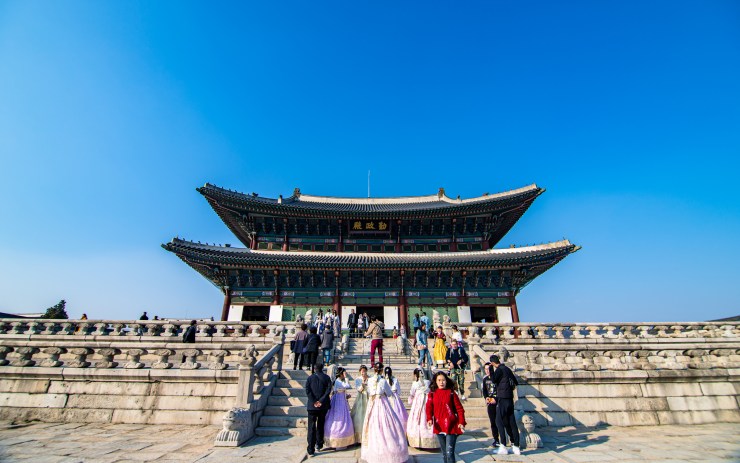
As the largest of the Five Grand Palaces built during the Joseon Dynasty, Gyeongbokgung Palace is a testament to Korea’s architectural ingenuity and historical grandeur. The palace complex boasts beautiful traditional structures and stands as a proud symbol of Korea’s cultural heritage.
Location: Jongno-gu, Seoul, South Korea. Easily accessible via Gyeongbokgung Station.
Scenic Spot: The largest and most iconic of Seoul’s Five Grand Palaces, featuring traditional Korean architecture, gardens, and the changing of the royal guard ceremony.
Best Time to Visit: Spring (March-May) for cherry blossoms or autumn (September-November) for colorful foliage.
Suitable for All Ages: Yes, though some areas have uneven stone paths.
Price: €2.50 for adults, €1.30 for children; Free entry if wearing a hanbok (traditional Korean attire).
Travel Tip: Witness the royal guard changing ceremony and wear a hanbok (traditional Korean attire) for free entry and a splendid photo opportunity.
15. Bukchon Hanok Village

This charming neighborhood showcases hundreds of traditional houses called hanoks that date back to the Joseon Dynasty. Bukchon Hanok Village is not just a tourist attraction but a living village inhabited by locals, providing a unique glimpse into the daily life of traditional Korean aristocracy.
Location: Jongno-gu, Seoul, South Korea. Easily accessible via Anguk Station.
Scenic Spot: A historic neighborhood showcasing hundreds of traditional Korean hanok houses, offering picturesque alleyways and cultural experiences.
Best Time to Visit: Morning for fewer crowds and better photo opportunities.
Suitable for All Ages: Yes, but some paths are steep and uneven, which may be challenging for elderly visitors.
Price: Free to visit.
Travel Tip: Be respectful of residents’ privacy and noise levels while strolling through the village, as this is still a residential area.
16. N Seoul Tower

Perched atop Namsan Mountain, N Seoul Tower is not only a top broadcasting tower but also an iconic part of the Seoul skyline, offering an observation deck with incredible views. Couples often visit the tower to lock “love padlocks” as a sign of their commitment to each other.
Location: Namsan Mountain, Seoul, South Korea. Accessible via cable car from Myeongdong Station or by hiking trails.
Scenic Spot: A 236-meter-tall tower offering panoramic views of Seoul, popular for its romantic atmosphere and love padlocks.
Best Time to Visit: Evening for stunning night views of the city skyline.
Suitable for All Ages: Yes, with elevator access to the observatory.
Price: €9.50 for adults, €7.50 for children (observatory ticket).
Travel Tip: For a more scenic approach, hike up Namsan Mountain to reach the tower instead of taking the cable car.
17. Myeongdong Shopping Street

Myeongdong is a bustling shopping district where you can find everything from high-end brands to affordable street wear, cosmetics, and accessories. The street food stalls here are also worth visiting, serving up a delicious array of Korean snacks.
Location: Jung-gu, Seoul, South Korea. Easily accessible via Myeongdong Station.
Scenic Spot: A bustling shopping district filled with fashion stores, beauty shops, and street food vendors offering local delicacies.
Best Time to Visit: Evening for a lively atmosphere and the best street food experience.
Suitable for All Ages: Yes, but can be crowded, making it less ideal for very young children or elderly visitors.
Price: Free to explore; shopping and food costs vary.
Travel Tip: Visit in the late afternoon or evening when the street comes alive with neon signs and street performers.
18. Insadong

Insadong is a vibrant neighborhood known for its traditional tea houses, galleries, and shops selling antiques and crafts. It’s the perfect place to find souvenirs and experience the artistic side of Seoul.
Location: Jongno-gu, Seoul, South Korea. Easily accessible via Anguk Station or Jonggak Station.
Scenic Spot: A cultural hub known for traditional tea houses, antique shops, art galleries, and handicraft stores selling Korean souvenirs.
Best Time to Visit: Afternoon for a relaxed stroll and to explore tea houses and artisan shops.
Suitable for All Ages: Yes, ideal for culture enthusiasts and families.
Price: Free to explore; shopping and tea house prices vary.
Travel Tip: Don’t miss out on trying traditional Korean sweets in one of the many traditional tea houses.
19. The War Memorial of Korea

Dedicated to educating visitors about Korea’s military history, The War Memorial of Korea offers an extensive collection of artifacts and exhibits from various conflicts, including the Korean War.
Location: Yongsan-gu, Seoul, South Korea. Easily accessible via Samgakji Station.
Scenic Spot: A large museum dedicated to Korea’s military history, featuring indoor exhibits, war relics, and outdoor displays of tanks, aircraft, and warships.
Best Time to Visit: Weekdays for a quieter experience and better access to exhibits.
Suitable for All Ages: Yes, with interactive exhibits that engage both adults and children.
Price: Free to visit.
Travel Tip: Allocate several hours for your visit as the museum is expansive, and there is much to learn and see.
20. Dongdaemun Design Plaza (DDP)

DDP is a major urban development landmark designed by Zaha Hadid, featuring a futuristic facade and serving as a hub for design and fashion events.
Location: Jung-gu, Seoul, South Korea. Easily accessible via Dongdaemun History & Culture Park Station.
Scenic Spot: A futuristic architectural landmark designed by Zaha Hadid, featuring exhibition halls, fashion markets, and LED-lit nightscapes.
Best Time to Visit: Evening for the illuminated LED rose garden and stunning night views.
Suitable for All Ages: Yes, with exhibitions, shopping, and open spaces for visitors of all ages.
Price: Free to explore the exterior; exhibition fees vary.
Travel Tip: Check the schedule for any ongoing events or exhibitions; the DDP often hosts various design-related shows and markets that are open to the public.
21. Hangang Park

Stretching along the banks of the Han River, Hangang Park offers vast recreational areas perfect for picnics, bike rides, and leisurely walks.
Location: Along the Han River, Seoul, South Korea. Easily accessible via multiple subway stations, including Yeouinaru Station (Yeouido Hangang Park).
Scenic Spot: A vast riverside park offering scenic walking and cycling paths, picnic areas, and boat cruises.
Best Time to Visit: Spring (March-May) for cherry blossoms or autumn (September-November) for cool weather and colorful foliage.
Suitable for All Ages: Yes, perfect for families, couples, and outdoor enthusiasts.
Price: Free to visit; rental fees for bikes and boats vary.
Travel Tip: Rent a bike or bring a picnic and join the locals in enjoying one of the most scenic spots in the city.
22. Hongdae

Known for its youthful and lively atmosphere, Hongdae is the area around Hongik University, filled with quirky shops, cafes, bars, and clubs. It’s a hotspot for urban arts, indie music, and nightlife.
Location: Mapo-gu, Seoul, South Korea. Easily accessible via Hongik University Station.
Scenic Spot: A lively district known for its youthful energy, street performances, indie music scene, quirky cafes, and vibrant nightlife.
Best Time to Visit: Evening for street performances, nightlife, and the best atmosphere.
Suitable for All Ages: Yes, but nightlife areas are more suited for young adults.
Price: Free to explore; shopping, food, and entertainment costs vary.
Travel Tip: Visit during the evening when live street performances and music are at their peak.
Plan Your Perfect Trip with Our Trusted Travel Partners
🚗 Find the Best Car Rental Deals with Rentalcars.com and GetRentacar.com
🏨 Discover the Best Accommodations with Booking.com
🌟 Discover Amazing Experiences with GetYourGuide.com and Tiqets.com
📶 Stay Connected with Airalo.com
Busan, South Korea: Ratings
Kid-Friendly Activities in Busan: 8/10 – Busan is a great destination for families, offering attractions such as Haeundae Beach, the Busan Aquarium, and various parks like Yongdusan Park. Additionally, there are child-friendly museums like the Busan Children’s Museum and interactive science centers.
Nightlife in Busan: 7/10 – Busan has a vibrant nightlife scene with numerous bars, nightclubs, and entertainment venues, especially in areas like Seomyeon and Haeundae. The nightlife here is lively, though slightly more laid-back compared to Seoul.
Sport in Busan: 8/10 – Sports enthusiasts will find plenty of activities in Busan, including hiking in the surrounding mountains, water sports at the beaches, and attending local baseball games at Sajik Baseball Stadium. The city also hosts international sports events like the Busan International Marathon.
Culture and Attractions in Busan: 9/10 – Busan is rich in cultural attractions, such as the Beomeosa Temple, Gamcheon Culture Village, and the Busan Museum. The city also hosts several festivals, including the Busan International Film Festival, showcasing its cultural diversity and heritage.
Gastronomy in Busan: 9/10 – Busan is renowned for its seafood, with Jagalchi Fish Market being a must-visit. The city offers a variety of traditional Korean dishes, street food, and international cuisine, making it a paradise for food lovers.
Shopping in Busan: 8/10 – Shopping options in Busan are diverse, from luxury brands at Shinsegae Centum City, one of the world’s largest department stores, to local markets like Gukje Market and BIFF Square. There are also numerous street shops and boutique stores.
Prices in Busan: 7/10 – Busan is moderately priced compared to other major cities in South Korea. While it’s generally affordable, prices can vary depending on the area and type of service.
Average price for a hotel night: $100
Cost of a lunch at a local restaurant: $10
Price of a beer: $5
Price of a coffee: $3
Beyond the City: Exploring Surroundings and Stays in Busan, South Korea
For those looking to explore beyond the urban allure and coastal scenery, top day trips near Busan lead to the cultural treasures and natural wonders of South Korea’s southern region. The historic Bulguksa Temple and the stunning landscapes of the Haeinsa Temple in Gayasan National Park offer peaceful retreats, while the vibrant city of Daegu presents a lively urban escape.
When it comes to finding the perfect place to stay, Busan accommodations offer a spectrum of choices, from high-rise luxury hotels offering panoramic views of the city and sea to traditional guesthouses providing a more authentic Korean experience, ensuring visitors can find the perfect spot to unwind.
FAQ About Things to Do in Busan, South Korea
What are the must-visit beaches in Busan?
Haeundae Beach and Gwangalli Beach are the two most popular beaches in Busan. Haeundae is bustling with activities, while Gwangalli is famous for its fine sand and stunning views of the Gwangan Bridge.
Can I explore traditional markets in Busan?
Absolutely! Jagalchi Fish Market, the largest seafood market in Korea, and Gukje Market, known for its wide range of goods and street food, are not to be missed for an authentic local shopping experience.
Is there a cultural village to visit in Busan?
Yes, Gamcheon Culture Village is a vibrant and colorful hillside community often nicknamed ‘the Machu Picchu of Busan.’ It’s filled with murals, quaint cafes, and art installations.
What hiking opportunities does Busan offer?
Busan is home to many scenic trails. Hiking up to the Seokbulsa Temple, located on Mount Geumjeongsan, provides both a spiritual and physical challenge with rewarding panoramic city views.
Are there any unique museums in Busan?
The Busan Museum of Art and the Trick Eye Museum offer unique experiences. The former showcases contemporary Korean and international art, while the latter features interactive 3D paintings and installations.
What is the best way to enjoy Busan’s coastal scenery?
Taking a cruise from Haeundae Beach or walking along the Igidae Coastal Walk offers breathtaking views of the ocean and the city’s coastline.
Can I experience hot springs in Busan?
Yes, the city is known for its natural hot springs. Hurshimchung Spa is one of the largest hot spring complexes in Asia and provides a relaxing experience.
What local food should I try in Busan?
Don’t leave Busan without trying the local seafood, especially the hoe (raw fish) and gukbap (rice soup). The street food in Nampodong and the fresh fish at Jagalchi Market are also highly recommended.
Sources:
https://en.wikipedia.org/wiki/Busan
https://www.getyourguide.com/busan-l32281/
This post may contain affiliate links, which means we may receive a commission if you click a link and purchase something that we have recommended, at no extra cost to you.
